
OuterField: Constellation Edge
Okay so here's the thing - you literally have to nail the edges before
you can even think about the middle part. Trust me on this one.
So there's this massive field of stars everywhere, and you can kinda
see where the patterns might go if you squint at it right.
But not in the middle.
Your work begins at the boundary.
Connect outer stars into structured constellations.
Only when the perimeter is stable may the inner field take form.
You've got to be precise if you want to get anywhere in this game.

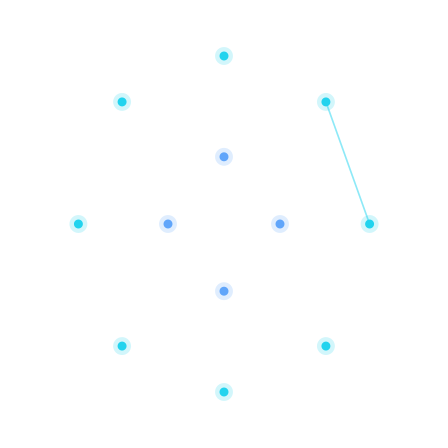
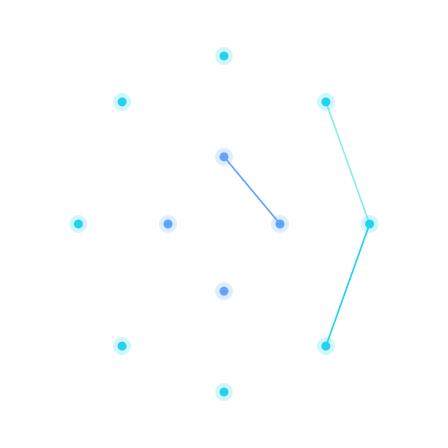
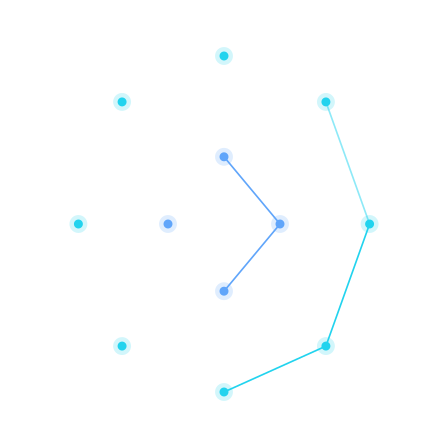
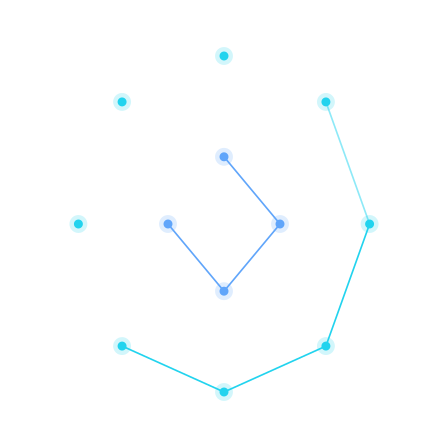
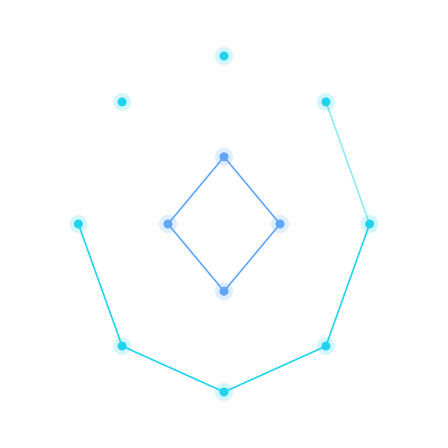
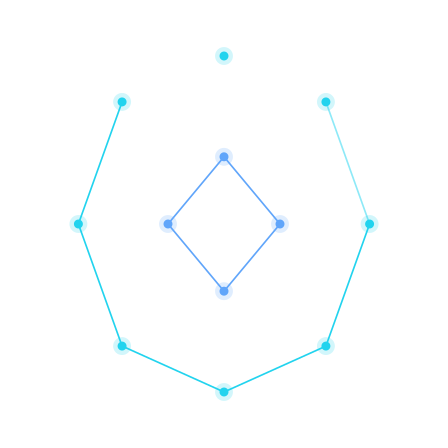
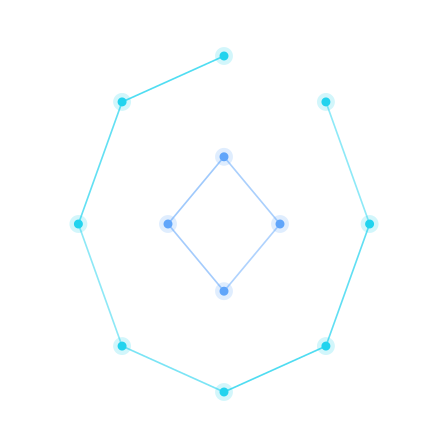
Structure Starts from the Outside
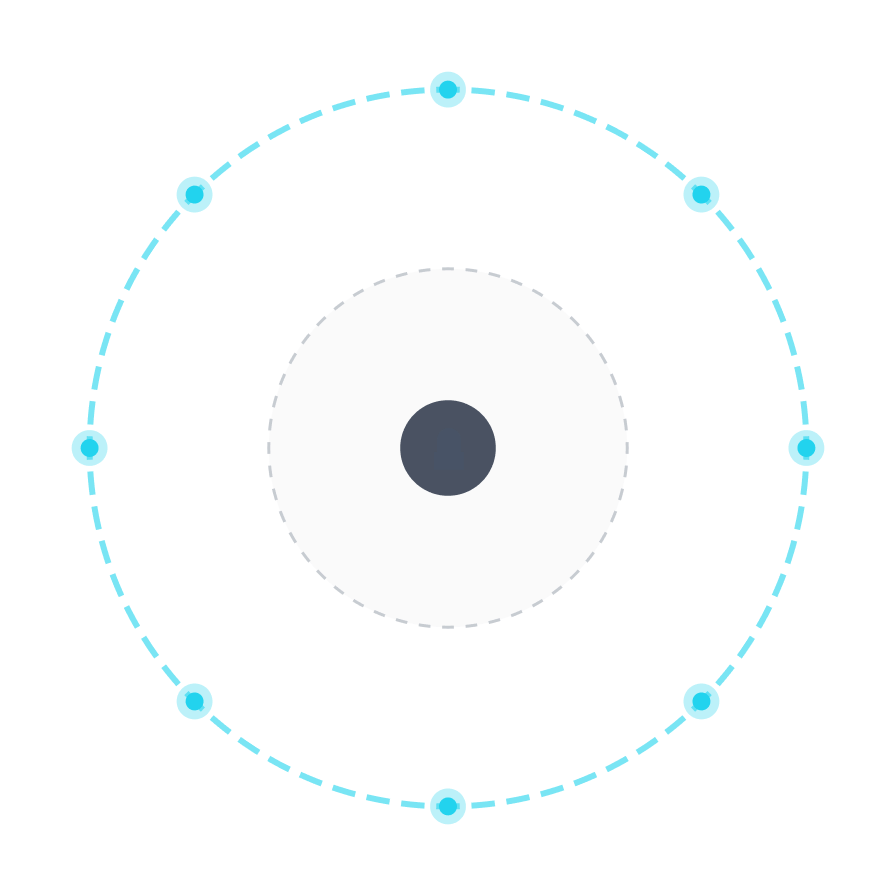
Each level presents a star map divided into:
- Outer boundary ring
- Inner open field
You must first complete specific geometric constellations along the outer perimeter.
- The boundary defines stability.
- Without it, the inner space remains inaccessible.
Core Gameplay

Identify required star nodes along the outer edge

Draw anchor links to form the correct boundary pattern

Ensure no lines intersect or break geometric rules

Once the perimeter is complete, unlock the inner field

Expand inward while maintaining structural integrity
Connections are permanent once placed.
Careful planning prevents dead ends.
RULES & FEATURES

Boundary Completion Rule
- Form a continuous geometric structure
- Avoid crossing links
- Match the required pattern shape
Incomplete or unstable edges prevent inner access.

Inner Field Unlock
- Inner star clusters become active
- Additional anchor points appear
- New patterns must integrate with the edge
Inner design must respect outer structure.

Stability Geometry
- Symmetry
- Balanced distribution
- Minimal redundancy
- Structural clarity
Misaligned patterns reduce stability rating.

False Alignments
Only one configuration properly stabilizes the perimeter.

Efficiency Scoring
- Minimal anchor usage
- Clean geometric layout
- No unnecessary inner connections
- Optimal sequence planning
Higher ratings reward precise constellation design.


Expanding Fields
Early levels feature small circular boundaries.
Later stages introduce:

Irregular outer shapes

Multi-layer perimeters

Rotating star clusters

Limited anchor allowances

Dual-boundary systems
Complexity grows outward and inward simultaneously.
The Look and Feel
Dark void background.
Soft white star glow.
Thin precise anchor lines.
Subtle animations indicate stability shifts.
No clutter.
No noise.
Only geometry and space.
Replay levels to refine anchor efficiency and achieve perfect structural
harmony.
Testimonials

"The whole outside-in thing is pretty cool, actually. Most puzzle games just let you start wherever, but this one makes you work backwards. When you finally get it right... man, it's like this perfect 'aha!' moment. Makes you feel pretty smart, not gonna lie. The minimal design keeps everything focused."

Elena P.
“The boundary mechanic is clever. You can’t rush into the center without stabilizing the edge first. You can't just wing it - you actually have to plan things out, which makes it feel way more rewarding when you nail it.”
Daniel R.
“I love the whole space vibe - it's really pretty and relaxing to look at. The glowing stars and thin lines feel elegant. It’s a puzzle that rewards precision rather than speed.”
Sofia M.
“The larger outer fields are surprisingly complex. Some patterns look correct but fail under stability rules. Finding the true alignment is very satisfying.”
Marcus L.
“I enjoy replaying levels to reduce anchor usage. There’s something very clean about achieving perfect geometric symmetry. Everything just feels... right, you know? Like it all makes sense.”
Aisha K.
“It’s simple in concept but deep in execution. The boundary-first mechanic makes it stand out. It’s thoughtful, structured, and very well designed.”
Thomas W.
Ready to Stabilize the Edge?
The boundary awaits alignment.
The stars hold their positions.
Get that perimeter sorted, and then you can tackle what's inside.